
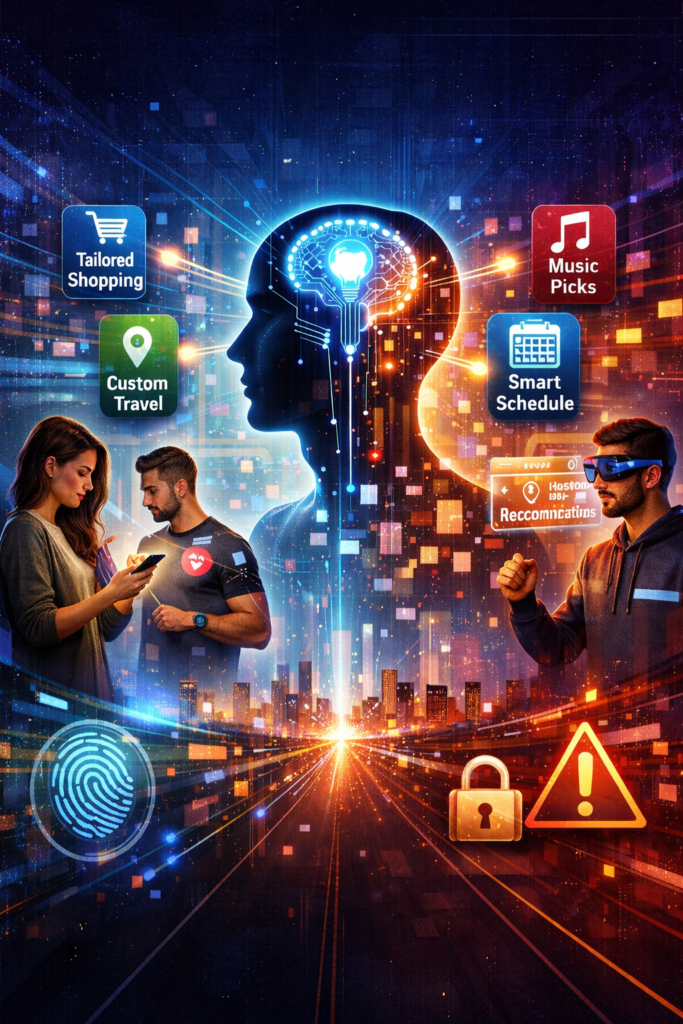
AI personalization 2026 is reshaping how technology adapts to individual users, allowing apps to learn preferences, predict behavior, and deliver smarter, more human-like digital experiences. AI personalization 2026 is becoming the biggest force reshaping how we interact with technology every day. From recommendation engines in shopping apps to adaptive UI/UX in productivity tools and personalized learning in education platforms, AI is not just “smart” anymore — it’s becoming you-aware. In this article, we’ll explore the major trends driving AI personalization, real-world use cases, challenges and risks, and what everyday users can expect as apps become more tailored to individual needs and behavior.
1. What Is AI Personalization & Why It Matters in 2026
AI personalization 2026 refers to systems that tailor content, features, and interactions based on individual user preferences, behavior patterns, and contextual data. In 2026, this goes beyond remembering preferences it means anticipating needs:
Predictive app menus
Dynamic learning paths in edtech
Adaptive privacy settings
Emotion-aware interfaces
Context-based recommendations in health and wellness
The goal is to make technology feel less like a tool and more like a companion.
2. Key Trends Driving AI Personalization in 2026
• Context-Aware Computing
AI systems today use not only your input but context — time, location, mood indicators (via sensors), and behavior history — to make decisions.
• Federated Learning
Instead of centralizing data, models learn on-device and share updates, preserving privacy while improving ai personalization 2026.
• Multimodal AI
AI that understands text, voice, visuals, and biometric signals simultaneously enables richer personalization.
• Real-Time Adaptation
Apps update their behavior continuously as users engage — not just on first login.
3. Real-World Examples (Everyday Apps You Use)
• Streaming Services
Platforms like Netflix and Spotify are now offering storyline-based recommendations that evolve as your mood changes or your listening context shifts (workout vs relaxation).
• Health & Fitness Apps
Apps now personalize workouts and meal plans based on sleep, stress levels, and recent activity — not just guessed preferences.
• Smart Assistants
AI assistants now anticipate tasks before you ask — reminding you of messages you forgot, auto-drafting replies based on tone, and summarizing content across platforms.
• E-Commerce
Stores tailor landing pages per user — not just products but homepage design, discounted bundles, and checkout flows based on spending habits.

4. Technical Foundations Behind Personalization
• Deep Learning
Neural networks that learn patterns from massive datasets.
• Reinforcement Learning
AI that dynamically adjusts recommendations based on feedback loops.
• Edge AI
Processing data locally on devices (not just in the cloud) for faster, more private personalization.
• Knowledge Graphs
Understanding relationships between entities (products, content, behavior) to personalize recommendations.
5. Benefits of AI Personalization for Users
Better relevance — less noise, more useful suggestions
Increased efficiency — fewer taps, faster results
Higher engagement — content that feels “made for you”
Reduced cognitive load — aids decision making
Enhanced accessibility — adaptive interfaces for users with special needs
6. Risks & Ethical Concerns
AI personalization is powerful but not without downsides:
• Privacy Erosion
Over-personalization can require sensitive data collection.
• Filter Bubbles
Users may be trapped in narrow recommendation loops.
• Manipulative Interfaces
Algorithms might nudge users toward decisions that benefit platforms (not users).
• Bias Reinforcement
Personalization can amplify biases present in historical data.
Addressing these risks needs transparent models, user control panels, and strict data governance.
7. What Developers & Companies Must Do
Implement opt-in personalization frameworks
Provide explainable AI dashboards
Use privacy-preserving techniques like differential privacy
Regularly audit models for bias
Offer easy toggles for personalization intensity
This ensures personalization helps rather than harms.
8. What Users Should Expect in 2026
By year’s end, mainstream apps will include:
Personalized startup tutorials
Adaptive UI themes
Mood-based content feeds
Predictive automation (e.g., smart replies, auto-organizing tasks)
Cross-platform learning of behavior
AI personalization will feel like an extension of your habits rather than a generic tool.

Conclusion
AI personalization is not the future — it’s the present evolution of technology. In 2026, it will make apps more intuitive, efficient, and human-centric. But meaningful benefits will only come when personalization is balanced with privacy, transparency, and user control. The winners in tech this year will be platforms that personalize with purpose — enhancing lives without exploiting data.

test
text