
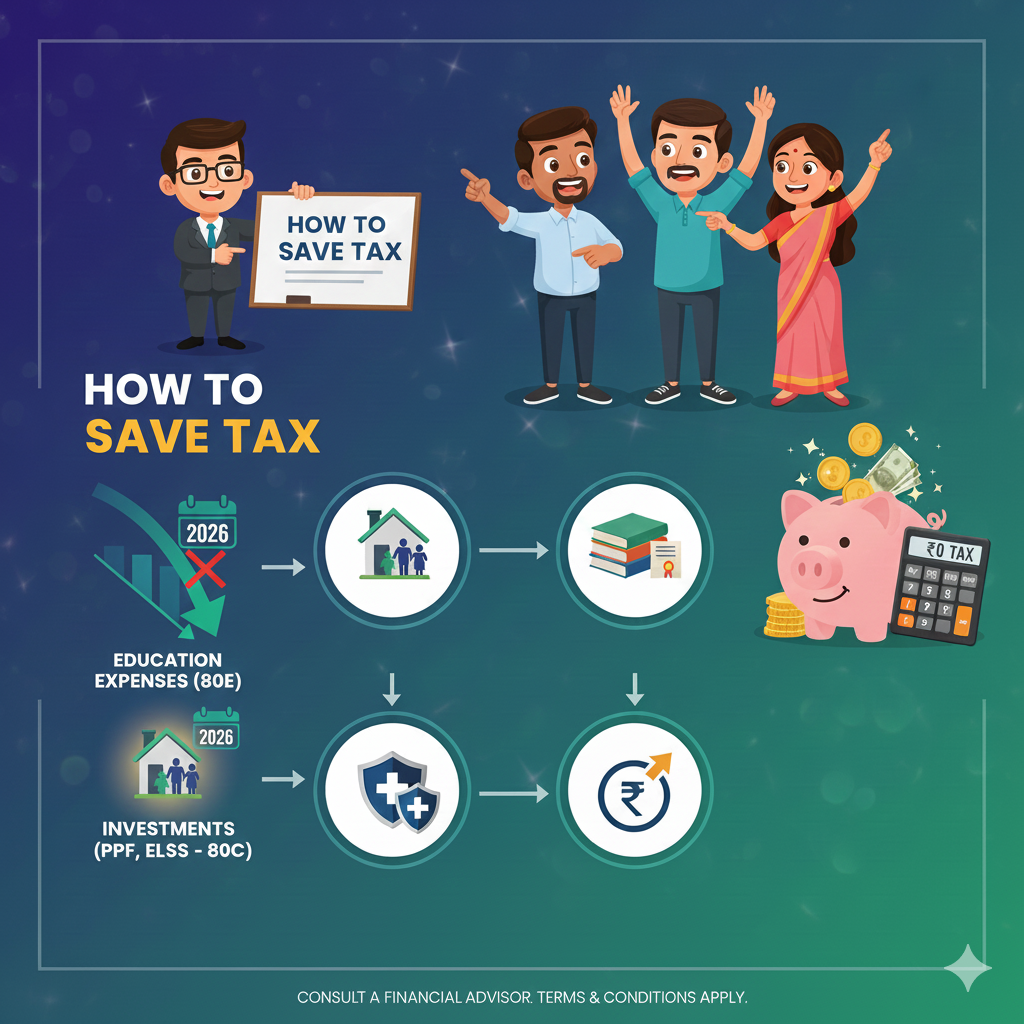
“How to Save Tax 2026” Matters More Than Ever
Salaried workers in India are looking for ways to save tax in 2026 since the majority of their take home pay is frequently eaten away by growing inflation, increased living expenses, and complicated tax laws. A person making ₹15 lakh a year usually pays more than ₹1.8 lakh in taxes, although most of this can be legally avoided with careful planning.
Whether you are a first-time taxpayer or an experienced professional, knowing how to save taxes in 2026 will enable you to use employer NPS benefits, government-approved deductions, and salary restructuring strategies to legally reduce your tax burden to zero.
This post will break down a salary of ₹15 lakh, compute actual tax, and then walk you through the process of using the Old Regime, NPS, 80C, HRA, LTA, and more to save tax 2026. You receive a ready checklist and a Zero-Tax Strategy Table at the conclusion.

How a ₹15 Lakh Salary Pays ₹1.87 Lakh Tax in 2026
Let’s examine how much tax a salaried individual actually pays under the Old Regime before discovering how to save taxes in 2026.
₹15,00,000 Salary: Pre-planning Deductions
₹75,000 is the standard deduction.
₹14,25,000 is the taxable income.
Old Regime 2026 Income Tax: ≈ ₹1,87,500 (including cess)
Every employee wants to know how to save taxes in 2026 since, in the absence of planning, about two lakh disappear annually.
Step-by-Step Legal Strategy to Bring Tax from ₹1.87 Lakh → ₹0
This is the most comprehensive zero-tax plan available to salaried people in India. Every point is completely lawful.
Using deductions under 80C → 80D → 80CCD(1B) → HRA → LTA → 24(b) → Salary restructuring is the main emphasis of the entire plan.
Let’s dissect it.
Section 80C – ₹1.5 Lakh (ELSS, PPF, Insurance, etc.)
Making full use of 80C is the first required step in starting to save taxes in 2026.
Investments to make:
₹50,000 in ELSS Mutual Funds
PPF: ₹50,000
₹12,000 is the term insurance premium.
EPF: around ₹38,000 (auto-deducted from pay)
₹1,50,000 in total 80C savings
Section 80D – Health Insurance (Self + Parents)
The simplest way to reduce taxes in 2026 is through health insurance.
Allowed Deductions:
Self + Family (under 60): up to ₹25,000
Parents:
<60 years old → ₹25,000
60 years → ₹50,000
Common Use Case:
Spouse + Self: ₹15,000
Senior citizens’ parents: ₹40,000
₹55,000 in total 80D savings
NPS Extra ₹50,000 – Section 80CCD(1B)
This is the secret tool for 2026 tax savings.
You can receive an additional tax deduction beyond 80C by investing ₹50,000 in NPS Tier-1.
₹50,000 in savings
Employer NPS Contribution Hack – 80CCD(2)
One of the most underappreciated strategies for 2026 tax savings.
Request that HR reorganize pay so that the employer contributes 10% of Basic to NPS.
This sum:
is not subject to taxes
does not dip below the 80C threshold.
10% of Basic is the only upper cap.
Benefits typically range from ₹50,000 to ₹90,000 tax-free income.
HRA, LTA, Food Allowance & Salary Restructuring Tricks
This is where 2026 tax savings strategies become effective.
Restructuring salary components is a lawful way to lower taxable income.
House Rent Allowance, or HRA
You are eligible for a significant tax deduction if you rent.
HRA savings are greater for metro areas like Bangalore, Delhi, and Mumbai.
Leave Travel Allowance, or LTA
Make two claims every four years. includes hotel stays, trains, and domestic flights.
Meal vouchers and food allowances
Tax-free up to ₹2,400 a month.
Internet and Phone Reimbursement
usually between ₹12,000 and ₹18,000 annually.
Uniform Allowance and Professional Allowance
Completely excluded.
When combined, this can reduce taxable income by ₹60,000 to ₹1,20,000.
Home Loan Interest (Section 24) + Other Hidden Deductions
How to save taxes in 2026 gets even simpler if you own real estate or want to purchase.
According to Section 24(b):
Home loan interest is deductible up to ₹2,000,000.
Additional covert deductions:
80E: Interest on Education Loans
80G: Contributions
Interest on Savings Accounts (80TTA)
80U: Disability Deduction
Using just two or three will eliminate the majority of taxes, even if you are unable to use them all.

Old Regime vs New Regime vs Zero-Tax Strategy (₹15 Lakh Salary)
| Category | New Regime Tax | Old Regime Tax | Zero-Tax Strategy |
|---|---|---|---|
| Gross Income | ₹15,00,000 | ₹15,00,000 | ₹15,00,000 |
| Standard Deduction | ₹75,000 | ₹75,000 | ₹75,000 |
| 80C | ❌ | ₹1,50,000 | ₹1,50,000 |
| 80D | ❌ | ₹55,000 | ₹55,000 |
| NPS 80CCD(1B) | ❌ | ₹50,000 | ₹50,000 |
| Employer NPS | ❌ | Partially exempt | ₹80,000 exempt |
| HRA + LTA + Other | ❌ | Limited | ₹80,000+ |
| Home Loan 24(b) | ❌ | Optional | ₹2,00,000 |
| Final Taxable Income | ₹14,25,000 | ₹10,65,000 | ₹0 – ₹1,20,000 |
| Final Tax Payable | ₹1,65,000 | ₹1,87,500 | ₹0 |
Final ₹15 Lakh Salary Tax-Saving Checklist for 2026
Use all of the following to effectively learn how to save taxe 2026:
Use 80C (₹1.5L) to the fullest.
Purchase health insurance and submit an 80D claim.
Add ₹50,000 NPS (80CCD1B).
✏ Salary restructuring → HRA, LTA, and meal coupons
Request 10% NPS (80CCD2) from your workplace.
Use modest deductions (80G, 80TTA) and claim ₹2 lakh in interest on your home loan.
Conclusion
The fundamentals of to save tax 2026 are the same whether you make ₹10 lakh or ₹25 lakh: maximize deductions, strategically employ NPS, and restructure salaries.
Every year, thousands of Indians legally lower their taxes to zero.
With the same approach mentioned before, you may now do the same.